Residence Permit (Ikamet): Your first application, without the panic
by Nate
Published 14 June 2026 · 11 min read · 👁 88 views
Quick summary
The Short-Term Residence Permit (Kısa Dönem İkamet İzni) is the residence permit most expats apply for first. You complete your application online through the official e-İkamet system, prepare your documents, attend your appointment at the Provincial Directorate of Migration Management (Göç İdaresi), and wait for a decision. Check you qualify for the permit type that fits your purpose, apply before your lawful stay runs out, and hand in a complete file.
Rules and requirements change. This article explains how the process works in practice — always confirm the current requirements with the official source listed at the end of this article before you act on it.
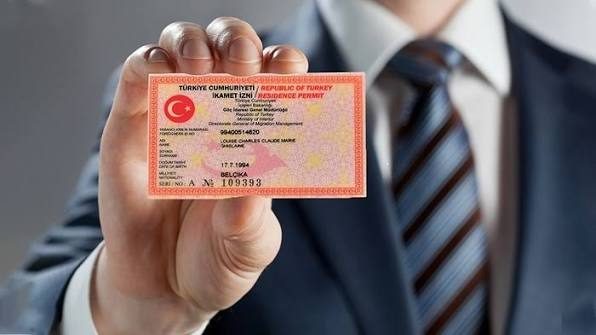
What You’ll Need
Requirements vary depending on your nationality, purpose of stay, and local Provincial Directorate of Migration Management, but most first-time applicants will need:
A valid passport (valid for at least 60 days beyond the requested residence permit period).
Proof of your address in Türkiye. Depending on your accommodation, this may include a notarized rental agreement, a title deed (Tapu), a notarized accommodation undertaking (Taahhütname), or other documents listed on your personalized e-İkamet checklist.
Valid health insurance covering the whole permit period you are asking for — SGK coverage, or a private policy that meets the residence-permit coverage rules (a licensed insurer alone isn't enough). Travel insurance from home generally won't do, and some applicants are exempt. Our health insurance guide covers what is accepted and who is exempt.
Recent biometric photographs taken within the last six months. The required number will appear on your personalized document checklist generated by the e-İkamet system.
A Turkish Tax Number (Vergi Kimlik Numarası), unless you already have a foreign ID number (YKN). Not every applicant is asked for it, but it’s worth getting before you start, because related steps — such as arranging private health insurance — may ask for it. The permit fees themselves are paid with the application number e-İkamet gives you.
Proof of sufficient and regular financial means. For a tourism short-term permit, the official checklist asks for documents, not just a declaration: income of at least 1.5 times the current net minimum wage if you apply alone, or at least one minimum wage per person when applying with family, shown over at least the last three months — for example bank statements covering three months, a pension award document, a stamped company letter, or a title deed plus lease for rental income. Tourism applicants are also asked for a travel plan and accommodation details.
Once your application is completed, the e-İkamet system generates a personalized checklist showing exactly which documents you need to submit.
The Application Process
First: Check You Qualify
A complete file does not guarantee approval. You apply for the permit type that matches your actual purpose of stay — tourism, study, family, a job and so on — and you have to meet that type's conditions. The official checklist is blunt: applications that can't justify their stated purpose are refused. Check the conditions for your type on the Presidency of Migration Management's residence permit page before you gather anything. A residence permit also doesn't give you the right to work; that needs a separate work permit.
1. Get a Turkish Tax Number
Apply online through the Revenue Administration (GİB): choose Potential Tax Identification Number for Foreigners, enter your details exactly as they appear in your passport and upload a photo of its photo page, following the form’s instructions. If your identity is verified, the number is shown and you can download a confirmation — save it. If verification fails even though your details are correct, contact a tax office (Vergi Dairesi) and bring your passport and a copy of its photo page. Our tax number guide walks you through it.
You’ll need the number for many official procedures in Türkiye. The residence permit fees themselves are paid with your e-İkamet application number, not the tax number.
2. Prepare Your Address Documents
Forms, fees and photos are easy to redo; address documents take the longest to put right, because they depend on other people — a landlord, a host, a notary. Sort them out before you book anything else.
If you’re renting:
A notarized rental agreement is generally required for first-time applications. That means a lease stamped by a notary (noter) — not a WhatsApp agreement or a signed printout — and your landlord, or someone they have authorised, usually has to attend the notary with you.
Depending on your province or individual circumstances, additional address verification documents may also be requested.
If you’re staying with family or friends:
The person you are staying with — your host, who need not be the owner — provides a notarized accommodation undertaking (Taahhütname). If your host is married, their spouse must give a notarized undertaking too.
You also need a recent electricity, water, gas or landline bill in your host's name — or, if they have just moved in, their new subscription agreement.
Staying in a hotel or student housing? The documents are different again — check your checklist rather than assuming.
Always follow the personalized document list generated by your e-İkamet application, as document requirements vary depending on your circumstances and province.
3. Sort Out Health Insurance
Most first-time applicants need valid health insurance covering the whole residence permit period they are requesting. If you are buying a private policy, it has to meet the residence-permit minimum cover set by the insurance regulator — ask for a policy issued for residence permit applications. SGK coverage (or proof of an SGK application) counts instead, and some applicants — for example under-18s and over-65s on short-term permits — are exempt. Details in our health insurance guide.
Keep both digital and printed copies of your insurance policy.
4. Complete the Online Application
Submit your application through the official e-İkamet system — and do it while your visa, visa exemption or other lawful stay is still valid. That is the deadline that matters: it applies to submitting the online application, not to the appointment, which may fall later. Istanbul's migration directorate says that if your lawful stay runs out before your appointment date, the application form lets you stay until that appointment.
For first-time applications, the system will either assign an appointment or provide instructions for submitting your application, depending on the procedures currently used in your province.
After completing your application, you will receive:
Your appointment information or submission instructions.
A personalized list of required documents.
Your application form showing the applicable government fees.
Appointment availability and submission procedures vary considerably by province and season, so apply as early as possible. In busy periods — Istanbul especially — the system may give you a slot weeks ahead, so don’t book a flight assuming it will be quick.
Pay the fees before you go: online through the Revenue Administration (GİB) or at a tax office, using the number on your e-İkamet application form, and bring the receipts. If you entered Türkiye visa-free and this is your first residence permit application, you may also owe a single-entry visa fee — nationalities exempt from that fee don't pay it, and the form shows what applies to you.
5. Submit Your Application
Depending on your province, you will either attend an appointment at the Provincial Directorate of Migration Management or submit your application using the procedure indicated by the e-İkamet system.
Since 17 July 2024 there is also an official option, nationwide, to hand in a first application file (tourism, study, business and similar purposes — not renewals) through a notary. The notary only receives and forwards the file; the provincial migration directorate still makes the decision.
Bring:
Your passport.
Original supporting documents.
Photocopies where required.
Your printed application form.
Proof that the applicable government fees have been paid.
If attending an appointment, arrive about 30 minutes early, and bring more biometric photos than you think you need.
The process is generally straightforward and focuses on verifying your documents; at a first application you may also be asked to give fingerprints. Turkish bureaucracy is not hostile, but it is literal: a missing photocopy sends you to a copy shop down the street and back into the queue.
6. Wait for the Decision
Residence permit applications are generally finalized within 90 days after all required documents have been submitted to the competent authority.
Processing times vary depending on the province and workload.
Once approved, your residence permit card is normally delivered by PTT to the address you provided. It comes as registered post, so make sure someone can actually receive it there — a building with no working buzzer and nobody home all day is a real way to lose weeks.
While your application is being processed, keep your approved Residence Permit Application Document with you. It is issued and validated only after the prescribed application steps have been completed — filing the online form alone does not produce it, so do not plan travel around a document you have not actually been given. Together with your fee receipts, it allows you to leave and re-enter Türkiye, provided you return within 15 days. If you remain outside Türkiye for longer than 15 days, the normal visa rules generally apply.
If Additional Documents Are Requested
The Provincial Directorate of Migration Management may request additional information or supporting documents after your application has been submitted.
If this happens, you are generally given up to 30 days to provide the missing documents. Failure to submit them within the specified period may result in your application being cancelled.
Things That Can Hold an Application Up
Not a ranking — just problems worth ruling out before your appointment.
1. Health Insurance That Doesn't Qualify
Travel insurance, or a private policy that doesn't meet the residence-permit minimum cover or doesn't run for the whole permit period.
2. Address Mismatches
Your application and all supporting documents should show exactly the same address, including apartment numbers where applicable.
3. Missing Financial Evidence
For a tourism permit the checklist asks for documented income — at least 1.5 times the net minimum wage for one applicant, over at least the last three months. Other permit types have their own requirements, and the directorate can always ask for more.
4. Passport Near Expiry
Your passport must remain valid for at least 60 days beyond the requested residence permit period.
If it is approaching expiry, renewing it before applying can help prevent delays.
5. Incomplete Documentation
Documents have to be handed in complete at the appointment. Anything missing, inconsistent or out of date can hold the file up — and if you're given a deadline to complete it and miss it, the application is dropped.
Typical Costs (2026)
Costs vary depending on your nationality, province, insurer, and personal circumstances.
Typical expenses may include:
Residence permit fee (varies by nationality).
Residence permit card fee.
Single-entry visa fee, for some first-time applicants who entered visa-free (not all nationalities).
Turkish private health insurance.
Notary fees (if applicable).
Translation and notarization fees (if applicable).
Biometric photographs.
Photocopying and printing.
The exact government fees are calculated automatically when you complete your e-İkamet application.
If Your Application Is Rejected
Being asked for missing documents during an application (above) is not the same as a refusal. A refusal is a formal decision, and your refusal notice sets out your legal options and their deadlines — follow those, and get professional advice if you're considering a challenge.
Two things to know: Istanbul's migration directorate says you can't apply again for the same purpose within six months of a refusal; and while your lawful stay continues, you may be able to apply for a different purpose. A refusal does not extend your lawful stay, so check how long you have left.
Once You Have the Card
Register your address: after a first application, address registration must be completed within 20 working days of the permit being approved. Then keep the card on you. You’ll be asked for it constantly — opening a bank account, signing a phone contract, and plenty of everyday things besides. If you plan to spend long stretches outside Türkiye, be aware that extended absences can affect a renewal.
If You Change Address
A move does not just affect where the card is posted. If your address changes, you must register the new one with the Provincial Directorate of Migration Management within 20 working days — easy to miss in the middle of a move, so set a reminder the day you sign the new lease. Moving to a different province is not just an address update: you have to apply for a new residence permit in the new province within 20 working days. Your registered address is what the permit is tied to, so an out-of-date one causes problems well beyond a missed delivery.
Renewal — Start Early
You can apply to renew your residence permit within 60 days before it expires, and in all cases before the expiry date.
Applying early is recommended, especially during busy periods when appointments and processing times may take longer.
Pro Tips
✔ Make sure every document shows exactly the same address.
✔ Keep digital copies of all documents.
✔ Bring both originals and photocopies.
✔ Arrive at least 30 minutes before your appointment, if one is scheduled.
✔ Ensure your passport remains valid for at least 60 days beyond the end of your requested residence permit period.
✔ Keep your Residence Permit Application Document until your residence permit card arrives.
✔ Use only the official e-İkamet system for your application.
✔ Appointments on e-İkamet are free. Ignore individuals or websites that charge to book one or claim they can speed things up. That's different from a lawyer or legal representative holding your power of attorney, who can act for you, or the official notary route for first applications.
Need Help?
If you’re unsure which documents apply to your situation, contact YİMER 157 (Foreigners Communication Center) or your local Provincial Directorate of Migration Management (İl Göç İdaresi Müdürlüğü) before your appointment or document submission.
The quickest way to avoid a wasted appointment is to ask someone who did it recently, with your passport and your permit type. That’s exactly the kind of question the community handles well — the rules on paper and the rules at the desk are not always the same document.
Sources
Verify the current rules yourself — where they come from.
- e-İkamet — official residence permit application systeme-ikamet.goc.gov.tr
- e-İkamet — short-term residence permit document checklist (fees, insurance, address, tourism income rule, address registe-ikamet.goc.gov.tr
- Presidency of Migration Management — residence permit types and conditionsen.goc.gov.tr
- Presidency of Migration Management — residence permit FAQ (deadlines, moving province)goc.gov.tr
- Istanbul Provincial Directorate of Migration Management — 34 residence permit questions (missing documents, refusal, waiistanbul.goc.gov.tr
- YİMER 157 — frequently asked questionsyimer.gov.tr
+ 4 more sourcesShow fewer
- Presidency of Migration Management — how to apply for a residence permit (brochure)goc.gov.tr
- Ankara Provincial Directorate of Migration Management — applications through notariesankara.goc.gov.tr
- SEDDK — Circular 2016/16 on health insurance for residence permit applicationsseddk.gov.tr
- e-Devlet — address registration and official documentsturkiye.gov.tr
Quick links for this topic
Visa & Residence apps and links — curated by the Smileys team.
💬
Got a tip or a twist your case taught you?
Tell us and we'll fold it into the article, with credit.
More in Residence & Legal
Working Remotely from Türkiye: Digital Nomad Visa, Work Permissions, Tax & Social Security
What remote workers need to know about Türkiye’s Digital Nomad route, Turkish work permissions, tax residence, employer approval, and social security.
Entering Türkiye: Visa-Free Stays, e-Visas and the 90/180 Rule
Whether you need a visa, how the 90/180 rule counts your days, e-Visa pitfalls, passport validity, the Digital Nomad route, staying longer, and what overstaying costs.