Daily Life in Istanbul: The little things that make a big difference
by Nate
Published 24 July 2026 · 4 min read · 👁 61 views
Quick summary
Moving to Istanbul isn’t difficult—it just takes a little getting used to. Finding an apartment, setting up utilities, buying groceries, paying bills, ordering food, dealing with deliveries… none of these are especially complicated on their own. It’s the hundreds of little things that slowly wear you down until they become second nature. This guide covers the practical side of everyday life so you can spend less time figuring things out and more time enjoying Istanbul.
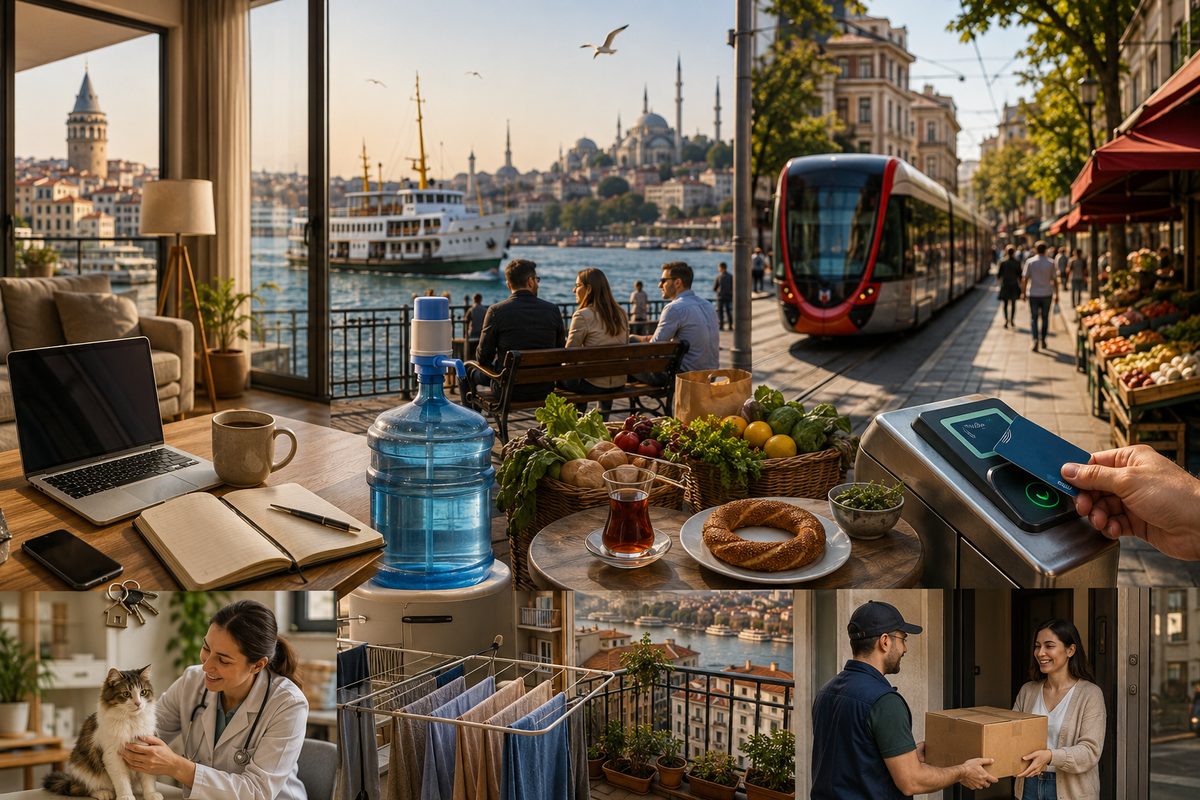
Finding an Apartment
Most expats rent rather than buy.
The biggest rental websites are:
Sahibinden
Hepsiemlak
Emlakjet
Many landlords prefer long-term tenants and may ask for:
A deposit (usually one or two months’ rent; the legal maximum is three)
One month’s rent in advance
Proof of income or employment
Sometimes a Turkish guarantor
Before signing anything:
Check the apartment during daylight.
Test the hot water.
Ask about monthly building maintenance fees (Aidat).
Confirm whether the apartment is furnished.
Make sure internet service is already available in the building.
Our apartment guide covers agent fees, rent increases and the questions to ask at a viewing.
Utilities
Most apartments require separate accounts for:
Electricity
Natural gas
Water
Internet
Some furnished rentals include utilities, while others don’t.
Setting up new utility accounts usually requires:
Passport or residence permit
Tax Number or Turkish ID Number
Rental contract
Sometimes a deposit
Most bills can be paid through your Turkish banking app. Our moving-in guide walks through electricity, water, gas and aidat step by step.
Internet
Fiber internet is widely available across Istanbul.
Major providers include:
Türk Telekom
Turkcell Superonline
Vodafone Net
Installation usually takes a few days.
Many apartments already have existing infrastructure, making activation much quicker.
Mobile Phones
Türkiye requires foreign phones to be registered if used beyond the permitted temporary period.
If you’re staying long-term, you’ll usually choose between:
Registering your existing phone
Buying a phone in Türkiye
The three main mobile operators are:
Turkcell
Vodafone Türkiye
Türk Telekom
Prepaid plans are easy to purchase with a passport. A phone brought from abroad works on Turkish networks for up to 120 days from your date of entry before it needs registering — our SIM card guide explains the options and the registration fee.
Groceries
The biggest supermarket chains include:
Migros
CarrefourSA
ŞOK
A101
BİM
For fresh fruit and vegetables, visit your weekly neighborhood market (Pazar).
Prices are often lower than supermarkets.
Drinking Water
Tap water is generally safe for washing, showering and cooking.
Most residents prefer bottled drinking water or large refillable water bottles delivered directly to their homes.
Water delivery can usually be ordered through mobile apps.
Food Delivery
Food delivery is part of daily life.
Popular apps include:
Yemeksepeti
Getir
Trendyol Go
Most restaurants deliver within 30–45 minutes. (Getir and Trendyol Go now belong to the same owner, Uber, so expect their apps and restaurant lists to converge.)
Shopping
For everyday shopping you’ll find:
Shopping malls
Local markets
Small neighborhood convenience stores (Bakkal)
Most shops accept contactless card payments.
Cash is still useful for smaller purchases.
Banking and getting around
Both have their own dedicated Handbook guides:
Opening a Turkish bank account as a foreigner — which banks work for non-residents, what to bring, and what to ask for at the branch.
Istanbulkart Mastery — the one card for metro, bus, ferry and Marmaray, including airport routes, fares and transfer discounts.
Learning Basic Turkish
You don’t need to speak fluent Turkish.
Learning a few phrases makes everyday life much easier.
Simple greetings and polite expressions go a long way.
Most younger people speak at least some English, but this becomes less common outside tourist areas.
Deliveries
Courier deliveries are fast and inexpensive.
Most online orders arrive within one or two days.
If you’re not home, the courier may:
Leave the package with building security.
Leave it at a nearby collection point.
Attempt delivery again.
Neighbors
Turkish neighbors are generally friendly and helpful.
It’s common to:
Say hello in lifts.
Exchange small favours.
Accept tea if invited.
Respecting quiet hours, especially late at night, goes a long way.
Pets
Istanbul is famous for its cats—and increasingly dog-friendly too.
Many apartments allow pets, although some landlords may refuse them.
Veterinary care is widely available and generally affordable.
The Small Things
Life in Istanbul often feels wonderfully chaotic.
Traffic will test your patience.
Paperwork may take longer than expected.
Someone will almost certainly offer you tea while you’re waiting.
After a few weeks, you’ll know which bakery opens earliest, which supermarket has the best fruit, which ferry has the best sunset, and which café feels like your second home.
That’s when Istanbul stops feeling like a city you’re visiting and starts feeling like a city you’re living in.
Final Tip
Nobody figures everything out in their first week.
Ask questions. Meet people. Accept invitations. Join local communities.
Most expats discover that life becomes much easier once they build a network.
That’s exactly why Smileys Community exists—to help newcomers make friends, discover the city, and feel at home in Istanbul a little sooner.
Sources
Verify the current rules yourself — where they come from.
Quick links for this topic
Practical everyday links — curated by the Smileys team.
💬
Got a tip or a twist your case taught you?
Tell us and we'll fold it into the article, with credit.
More in Everyday Life