 Everyday Life
Weather in Türkiye: What to Expect, Region by Region
by Nate
Published 13 November 2026 · 7 min read
Quick summary
Türkiye has at least four climates. Here is what the weather is really like in each region and season, from humid coasts to snowy plateaus, and what newcomers don't expect.
The short answer
Türkiye does not have one climate. It has at least four, and they can differ more than the weather in two separate countries. On the same January day it can be 15°C (59°F) and sunny in Antalya, 10°C (50°F) and raining in Istanbul, and well below freezing in Ankara. Where you live decides what kind of year you have.
As a rule: the south and west coasts have hot, dry summers and mild, rainy winters. Istanbul and the Marmara region are cooler and damper. The central plateau is dry, with cold winters and hot summer days. The Black Sea coast is green because it rains all year, and the east has long, severe winters.
Typical temperatures by city
Average daytime highs in the coldest and warmest months, rounded. Nights are usually 7 to 10 degrees cooler on the coast and up to 15 degrees cooler inland.
Istanbul: 10°C (50°F) in January, 30°C (86°F) in July.
Bursa: 10°C (50°F) in January, 32°C (90°F) in July.
İzmir: 13°C (55°F) in January, 34°C (93°F) in July.
Bodrum: 15°C (59°F) in January, 34°C (93°F) in July.
Antalya: 15°C (59°F) in January, 35°C (95°F) in July.
Ankara: 5°C (41°F) in January, with nights around -2°C (28°F); 31°C (88°F) in July.
Eskişehir: 4°C (39°F) in January, with nights around -3°C (27°F); 30°C (86°F) in July.
Trabzon (Black Sea): 11°C (52°F) in January, 28°C (82°F) in July.
Erzurum (east): -4°C (25°F) in January, with nights around -16°C (3°F); 28°C (82°F) in July.
These are long-term averages, and real years swing well above and below them.
Region by region
Istanbul and the Marmara region
Summers are warm and humid rather than extreme. Winters are gray, damp and windy more than truly cold, and the damp makes it feel colder than the thermometer says. Rain falls mostly from autumn to spring. It snows most winters, usually for a few days at a time, and when it does the city slows down noticeably. Storms and fog regularly suspend ferry services, so commutes across the Bosphorus need a backup plan.
The Aegean and Mediterranean coasts
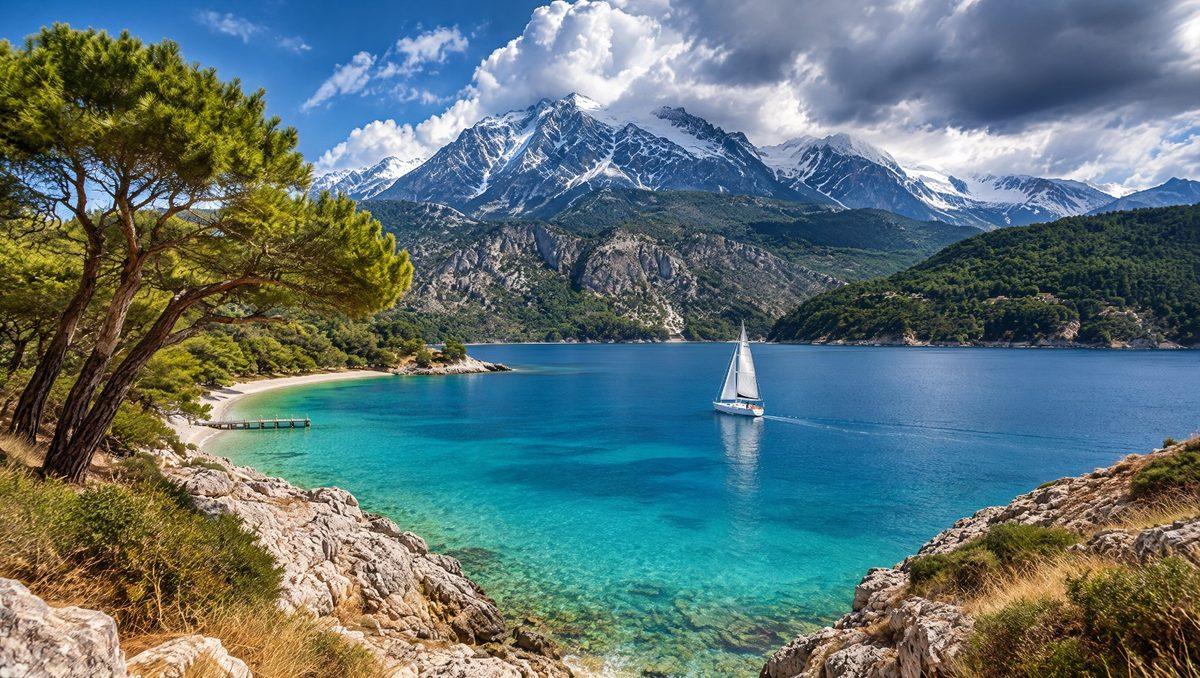
This is the Türkiye of the postcards: İzmir, Bodrum, Fethiye, Antalya. From June to September it barely rains at all, and July and August afternoons regularly pass 35°C (95°F). The Aegean side is drier and breezier; the Mediterranean side around Antalya is hotter and more humid. Winters are mild, but they are also the rainy season: Antalya gets over 1,000 millimeters of rain a year, well above Istanbul's total, and nearly all of it falls between October and April, often in heavy bursts.
Central Anatolia
Ankara, Eskişehir and Cappadocia sit on a high plateau, roughly 800 to 1,100 meters above sea level. The air is dry. Winters are cold, with frost on most nights and regular snow. Summer days are hot, but the nights cool down sharply, which many people find easier to live with than the sticky coastal heat. Ankara gets only about 400 millimeters of rain a year, less than half of Antalya's.
The Black Sea coast
The north coast is the exception to almost everything above. It rains in every season, summers are warm rather than hot, and the hills are deep green as a result. The province of Rize, in the northeast, is the wettest in the country, with more than 2,300 millimeters of rain a year, about four times the national average.
The east and southeast
Eastern Anatolia has the hardest winters in Türkiye, with months of snow and nights that can fall below -30°C (-22°F). The southeast, toward the Syrian border, is the opposite extreme in summer: in July 2025 the town of Cizre recorded 49.4°C (121°F).
Season by season
Spring (April to early June): the best season almost everywhere. Mild days, green landscapes and wildflowers. Expect some rain and cool evenings, especially inland.
Summer (mid-June to mid-September): hot and dry across most of the country. Coastal cities are humid; the plateau is hot by day and pleasant at night. This is also wildfire season on the south and west coasts.
Autumn (mid-September to November): warm days well into October, and a sea that is still warm from summer. The first heavy rains arrive on the coasts, sometimes with flash floods.
Winter (December to March): rainy on the coasts, snowy inland and in the east. Sunny, mild days are common in the south, but so are week-long wet spells.
When can you swim?
On the Mediterranean coast around Antalya the sea is comfortable from about June to October, peaking near 28°C (82°F) in August, and never drops much below 17°C (63°F). The Aegean around İzmir and Bodrum is a little cooler, about 24°C (75°F) at its warmest. Around Istanbul the sea is only really inviting in July, August and early September, and falls to about 8°C (46°F) in winter.
What newcomers do not expect
Cold homes in warm places. In the big cities most apartments have natural gas heating with radiators, usually on the flat's own gas account. In coastal resort towns many homes are built for summer and rely on air conditioners and electric heaters in winter, which is less comfortable and costs more to run. Ask how a home is heated before you rent it.
Humidity changes everything. 33°C (91°F) in Antalya or Istanbul is harder work than 33°C in Ankara. Air conditioning is close to essential on the coasts in July and August.
Rain comes in bursts. Coastal rain tends to arrive as a few intense downpours, not steady drizzle. Streets and underpasses can flood quickly, so check warnings before driving in a storm.
Snow is a city event. In Istanbul even a moderate snowfall can close schools and disrupt flights, ferries and roads for a day or two.
Altitude matters as much as latitude. Drive an hour inland from the Mediterranean and you can be in ski country. Several mountain resorts are within easy reach of big cities, including Uludağ, above Bursa.
Daylight and the clock
Türkiye has stayed on the same time all year since 2016: there is no clock change in spring or autumn. The country kept its summer time, so winter mornings are dark, especially in the west. In Istanbul the sun does not rise until about 8:30 in early January and sets around 5:40 in the afternoon. The reward comes in June, when it is light from about 5:30 in the morning until nearly 9 at night. It also means the time difference with Europe changes with the seasons, even though Türkiye's clocks do not.
A changing climate
Türkiye's weather is getting hotter and less predictable. The Turkish State Meteorological Service describes the country as one of the regions most exposed to heat waves, drought, wildfires and floods, and July 2025 alone set dozens of new local heat records. Rainfall swings sharply from year to year: 2025 was more than a quarter drier than normal nationwide, while early 2026 brought some of the wettest winter months in decades. In practice this means summer water restrictions in some cities and resort areas in dry years, and a higher wildfire risk on the coasts.
Take summer heat seriously. During a heat wave, stay out of the midday sun, drink more water than you think you need and check on older neighbors. Each province's governor also bans entry to forests during the fire season, usually from late spring or early summer into October. Dates differ by province, designated picnic areas normally stay open, and the bans are enforced.
So where is the weather best?
It depends on what you can live with. If you want the mildest winters, look at the Mediterranean and southern Aegean coasts, and accept very hot summers. If you prefer four clear seasons and dry air, the central plateau suits you, as long as you are happy with real winters. Istanbul and the Marmara region sit in between: nothing extreme, but a long gray season. And if you love green landscapes and do not mind rain, the Black Sea coast is unlike anywhere else in the country.
Our city guides go deeper into daily life in each place: Istanbul, İzmir, Antalya, Bodrum and Fethiye.
Where to check the forecast
The Turkish State Meteorological Service (MGM) publishes forecasts and color-coded weather warnings for every province and district, on its website and in its mobile app. For anything that affects travel or safety, such as storms, heavy snow or extreme heat, its warnings are the ones local authorities act on.
Last checked: November 2026. City temperatures and rainfall are rounded long-term averages from the Turkish State Meteorological Service (1991–2020 for most cities, 1950–2025 for Istanbul); Bodrum's come from other long-term climate data. Any single year can differ considerably.
Sources
Check the latest details yourself, straight from the source.
Quick links for this topic
Practical everyday links — curated by the Smileys team.
💬
Got a tip or a twist your case taught you?
Tell us and we'll fold it into the article, with credit.
More in Everyday Life
Volunteering in Istanbul: A Practical Guide for Expats and International Students
Want to volunteer in Istanbul? Where international residents can start, what to check about permits and faith-based groups, and how to get a reply.
Istanbul Pet Resources Directory
Find veterinary clinics, emergency animal hospitals, pet sitters, boarding services and municipal animal-care resources in Istanbul.
Pet Ownership in Istanbul: A Practical Guide for Expats
Moving to Istanbul with a pet? Learn about import rules, PETVET registration, veterinarians, pet-friendly housing, transport, adoption and emergency care.