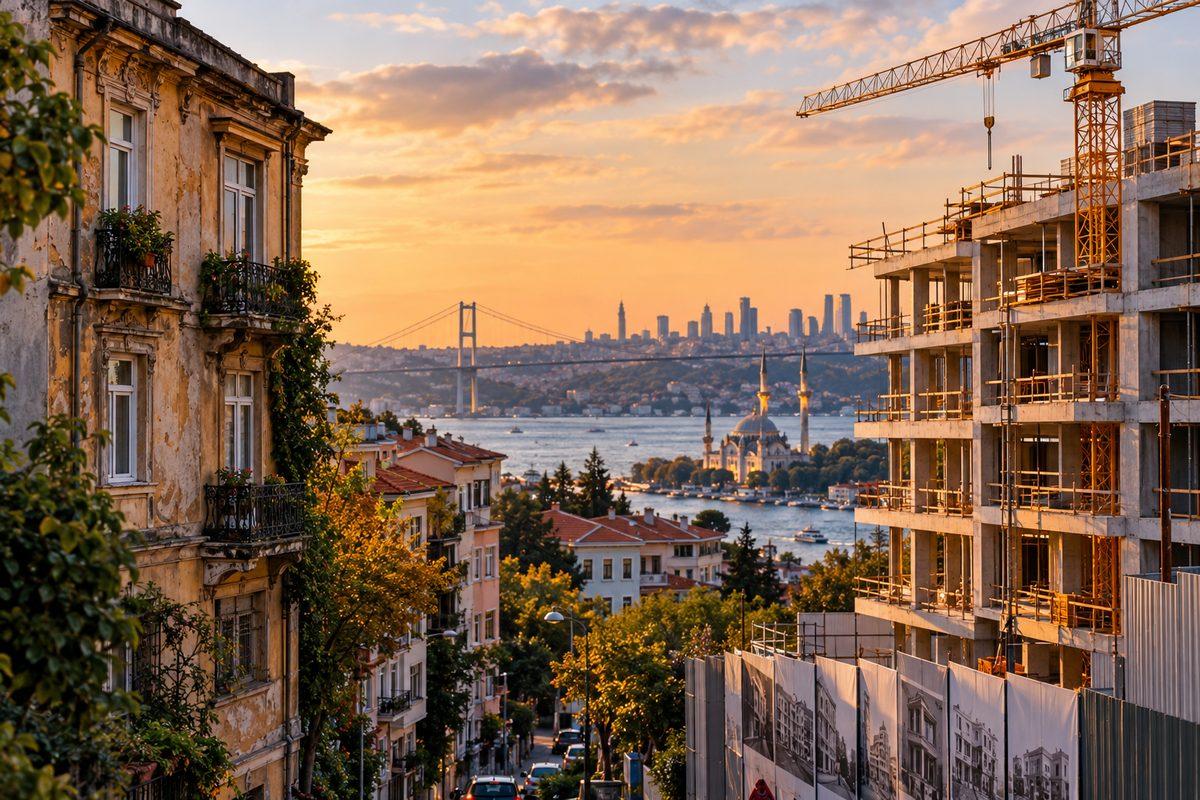
Istanbul Is Rebuilding: What You Should Know About Urban Transformation
From Kadıköy to Beşiktaş, older apartment buildings are being replaced across Istanbul. Here’s what urban transformation means for residents, renters, and anyone planning to make the city their home.
Nate
10 October 2026 · 👁 15 views
If you’ve spent time walking through Istanbul’s residential neighborhoods, you’ve probably noticed the construction.
An older apartment building disappears behind fences. A demolition crew arrives. A few months later, a new residential development begins taking shape.
In neighborhoods such as Kadıköy, Maltepe, Şişli, and Beşiktaş, scenes like these have become familiar.
Much of this activity is connected to kentsel dönüşüm, Türkiye’s urban transformation process.
For a city facing significant earthquake risks, replacing unsafe buildings is an important priority. But for the people living in those buildings, redevelopment can also mean moving out, finding temporary accommodation, dealing with additional expenses, and navigating unfamiliar legal procedures.
Whether you’re an expat renting an apartment, an international student looking for accommodation, or a long-term Istanbul resident, understanding how urban transformation works can help you avoid unexpected problems.
Why Is Istanbul Rebuilding So Much?
Istanbul is located near active fault systems in the Marmara region, making earthquake preparedness a major concern.
Many residential buildings were constructed before today’s earthquake regulations came into effect.
Following the devastating 1999 Marmara earthquake, Türkiye progressively strengthened its building standards. The current Turkish Building Earthquake Code took effect in January 2019.
However, an important distinction is often overlooked:
An old building is not automatically unsafe, and a new building is not automatically earthquake-proof.
Construction quality, structural design, materials, ground conditions, and modifications made over the years all influence how a building might perform during an earthquake.
Only an appropriate professional assessment can provide reliable information about a building’s structural condition.
What Exactly Is Kentsel Dönüşüm?
Kentsel dönüşüm translates as urban transformation or urban renewal.
In practice, it can involve identifying buildings considered structurally risky, demolishing them, and constructing replacements that comply with applicable regulations.
One of the main legal frameworks is Law No. 6306, which establishes procedures for dealing with risky buildings.
Once a building is officially designated as risky, owners and residents may face a process involving notifications, legal deadlines, evacuation, demolition, and redevelopment decisions.
Depending on the circumstances, owners may negotiate with a construction company to replace the existing building.
One detail surprises many people: not every apartment owner needs to agree for certain redevelopment decisions to move forward.
Under the current legal framework, specified decisions may be made by owners representing a simple majority of ownership shares, subject to the required procedures.
For residents, understanding the building’s official status is therefore especially important.
What Happens If You’re Renting?
Imagine you’ve found a great apartment in Kadıköy.
It’s close to the metro, the rent is reasonable, and you’ve finally settled into the neighborhood.
A few months later, your landlord tells you the building is entering urban transformation.
What happens next?
First, don’t assume that an informal discussion about redevelopment means you must immediately leave.
The legal consequences depend on the building’s official status, any notices issued, and the applicable procedures.
However, if an official evacuation or demolition process begins, residents may eventually be required to vacate the building.
Depending on the circumstances and eligibility requirements, tenants may qualify for certain relocation assistance programs.
Before renting an older apartment, ask whether the building has an official risky-building designation or an active redevelopment process.
It’s also sensible to keep copies of your rental agreement, payment records, and any official notices.
If you receive an evacuation notice, verify its authenticity and seek qualified advice promptly.
What About Apartment Owners?
For property owners, urban transformation can involve significant financial and legal decisions.
A redevelopment agreement may determine how the new apartments are allocated, whether owners must make additional payments, when construction should be completed, and what happens if the contractor fails to meet its obligations.
Before signing, owners should understand:
The proposed construction timetable and delivery date.
Any additional payments required from owners.
Contractual penalties for delays.
Guarantees and protections if the contractor cannot complete the project.
The size, specifications, and allocation of the new apartments.
Responsibilities for temporary accommodation and other expenses.
Independent legal and engineering advice can be valuable before committing to a redevelopment agreement.
Is Istanbul Losing Its Neighborhood Character?
Urban transformation is about more than construction.
Think about an older street in Moda or Yeldeğirmeni, where residents know the local shopkeepers, neighbors have lived beside each other for years, and small businesses are part of everyday life.
When buildings are demolished and residents move away, some of those relationships can change.
New buildings may improve safety, comfort, accessibility, and energy efficiency.
But redevelopment can also bring higher housing costs, different building designs, and changes in the local population.
Not everyone who moves away during construction necessarily returns.
There is also an important distinction between ordinary older apartment buildings and officially protected historic properties.
Registered cultural heritage buildings are subject to specific conservation rules under Turkish law. Their alteration or redevelopment may require special approvals.
The challenge for Istanbul is to improve earthquake safety while preserving the architectural and social qualities that make its neighborhoods distinctive.
Five Things to Check Before Renting in Istanbul
If you’re new to Istanbul or planning to move apartments, these questions are worth asking before signing a lease.
1. Is the building officially classified as risky?
Ask whether there is an official risky-building designation or an ongoing redevelopment procedure.
2. Are there plans to demolish or reconstruct the building?
A landlord may know that owners are discussing redevelopment even if formal proceedings have not started.
3. Has the building undergone a professional structural assessment?
Don’t rely solely on the building’s age, appearance, or a verbal assurance that it is safe.
4. What happens if you need to leave?
Understand your rental agreement and seek advice about your rights if an official evacuation process begins.
5. Are you choosing the apartment for the right reasons?
Location, transport connections, rent, and neighborhood atmosphere matter. But building safety and legal status deserve just as much attention.
These checks cannot guarantee earthquake safety, but they can help you make a better-informed housing decision.
Where Can You Find Reliable Information?
Urban transformation rules and financial assistance programs can change, so it’s important to use official sources rather than relying entirely on social media discussions.
Useful starting points include:
Urban Transformation Presidency — Information about urban transformation procedures and programs.
Ministry of Environment, Urbanization and Climate Change — Government information on building regulations and related policies.
AFAD — Earthquake preparedness and disaster information.
Official Legislation Portal — Turkish laws and regulations.
For building-specific questions, consult the relevant authorities and qualified legal or engineering professionals.
A Safer Istanbul for Everyone
Istanbul is a city that constantly changes.
New buildings rise, neighborhoods evolve, and people move between different parts of the city.
Urban transformation is an important part of preparing Istanbul for future earthquakes. But its success should involve more than replacing old buildings with new ones.
It should also consider residents’ safety, housing affordability, neighborhood character, and the challenges faced by people who must temporarily leave their homes.
For international residents, understanding these changes is part of learning how the city works.
And whether you’ve lived in Istanbul for twenty years or arrived last month, knowing more about your building and your housing rights is always worthwhile.
A safer Istanbul benefits everyone who calls this city home.
This article is intended for general information and does not replace professional legal or structural engineering advice.
Explore more practical guides, local information, and community activities at Smileys Community.
Sound like your kind of Istanbul?
Smileys is where people here meet in real life — dinners, walks, clubs. Small, curated, no feed to scroll.