Istanbul Street Markets: 7 Places to Experience Local Life
Discover Istanbul’s best local markets, from Kadıköy’s famous bazaar to Feriköy’s organic and antique markets. Find market days, locations and shopping tips.
Nate
Published 5 November 2026 · 👁 24 views
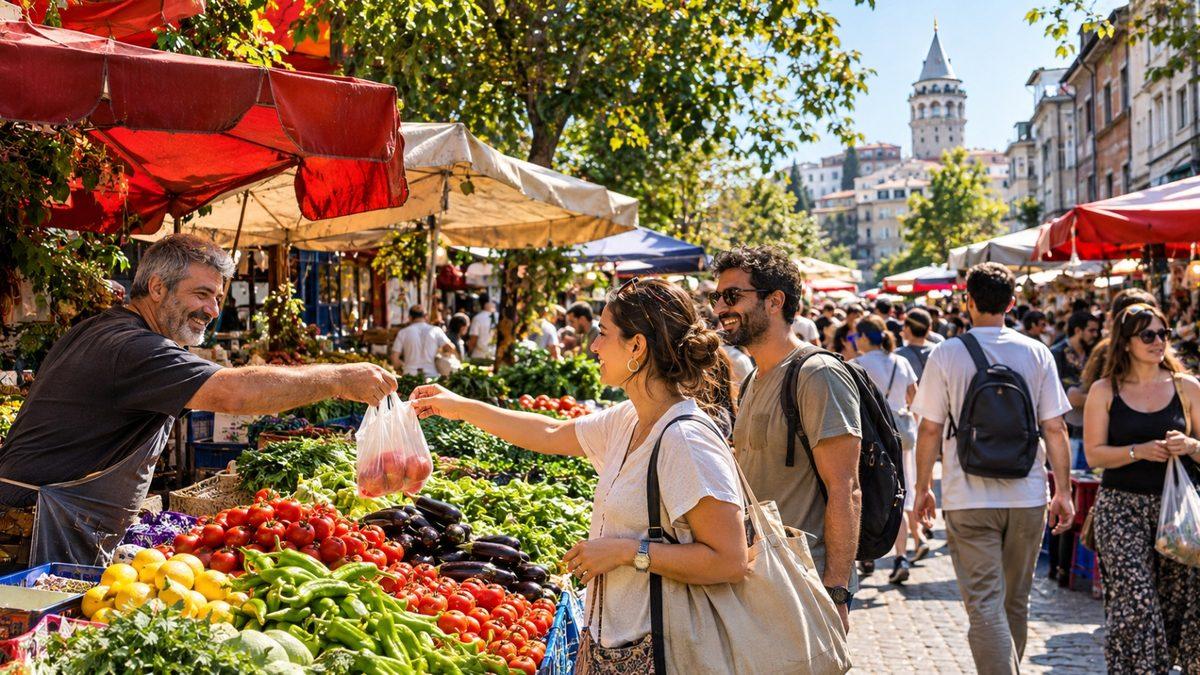
Tomatoes, factory surplus, old records and neighborhood chatter: a week inside the markets where Istanbul does its everyday living.
On Wednesday morning in Fatih, the streets behind the great mosque stop being streets. Stalls run down both sides and around the next corner, and by the time you’ve squeezed past the cheese, the fish and the shoes, you may have forgotten which way you came in.
Istanbul street markets work like this all over the city, at a smaller scale. For one day a week, a neighborhood lane or covered lot becomes a grocery store, a clothing shop and a place to catch up with the neighbors. Then the stalls come down, and it’s an ordinary street again.
People go to these places for tomatoes and clothes, not souvenirs, which is exactly why they’re worth your time. They show you what the city eats, what it wears and how it haggles. Whether you’ve just moved here or you’re only in town for a week, here are seven markets to follow from Tuesday to Sunday.
First, a Word About Pazar
The Turkish word pazar means both “market” and “Sunday,” so a market held on Sundays can be a Pazar Pazarı, a “Sunday Market.” Markets usually take the name of their neighborhood, their day, or both. You’ll also hear semt pazarı for a neighborhood market and sosyete pazarı for one known for clothes and factory surplus. A bit pazarı is a flea market, and an antika pazarı sells antiques.
Tuesday: Kadıköy Stocks the Kitchen
The week starts with a misnomer. The Historic Tuesday Market, or Tarihi Salı Pazarı, moved out of central Kadıköy long ago and now fills a covered site in Hasanpaşa, a few kilometers from the ferry piers. It also runs twice a week, and each day has its own personality.
Tuesdays lean toward food: fruit, vegetables and the staples of a week’s cooking. Come with a list and a sturdy bag, then head back to the waterfront with our Kadıköy guide. We’ll return here on Friday, when the place changes completely.
If you go: Tuesday and Friday. Hasanpaşa, Uzunçayır Caddesi No: 32, Kadıköy. Covered. About five minutes on foot from Uzunçayır metrobüs stop, or a short walk from Acıbadem (exit 3) on the M4 metro.
Wednesday: Fatih at Full Volume
The Çarşamba Pazarı, or Wednesday Market, is the one to see if you see only one. It’s less a place than a takeover, spreading across the Ali Kuşçu and Zeyrek neighborhoods with no single entrance and no obvious end. It sells everything from eggs to shoes, and on a busy morning you move at the pace of the crowd.
This is a traditional part of the city, so dress modestly, especially around the mosque. When the crowds become too much, the mosque courtyard is the place to catch your breath. If you still have energy, the old streets of Fener lie toward the Golden Horn.
If you go: Wednesday. Streets behind and north of Fatih Mosque; aim for Fatih Caddesi. About a kilometer from Emniyet-Fatih on the M1 metro or Fener on the T5 tram. Buses along Fevzi Paşa Caddesi stop at Fatih.
Also Wednesday: A Quieter Morning in Göztepe
On the other side of the Bosphorus, the same morning could hardly feel more different. The Kadıköy Organic Market sets up inside Özgürlük Parkı, where shoppers browse seasonal produce, eggs, honey and olive oil under the trees. Organizers describe the produce as certified organic, and it’s fair to ask a stallholder about any specific product.
It’s an easy routine to adopt if you live on the Asian side: do your shopping early, then stay for a walk in the park.
If you go: Wednesday, from about 6:00 a.m. Inside Özgürlük Parkı, Göztepe, Kadıköy. Göztepe Marmaray station is the closest rail stop, and buses from Kadıköy stop nearby on Minibüs Caddesi.
Thursday: Bargain Hunting in Erenköy
By Thursday, the action moves to the residential streets of Erenköy, where a neighborhood market doubles as a clothing bazaar. It’s smaller and easier to handle than Fatih, with racks of discounted clothes, children’s wear and home textiles alongside the produce.
This is the place to train your eye. Some stalls offer real bargains and others can charge as much as a store, so a brand label alone tells you little. Guides often single out the market’s döner stand, so come hungry. Bağdat Caddesi, the area’s long shopping street, is close by for a coffee afterward.
If you go: Thursday. Erenköy, Kadıköy, along Çobanyıldızı, Kamiller and Bengi streets and nearby lanes. Open-air. A short walk from Erenköy Marmaray station.
Friday: Fındıkzade or Kadıköy
Two markets run on Fridays, one on each side of the city.
Fındıkzade (European Side)
Istanbul’s municipal data lists this as Haseki Sultan market, after its neighborhood, while Fatih Municipality has also called it the Fındıkzade Friday Market. It’s classed as a large market and sells food as well as clothes, shoes and bags. The T1 tram stops nearby, and the same line continues to Sultanahmet if you want to add some sightseeing.
If you go: Friday. Haseki Sultan, Fatih, on Kızıl Elma Caddesi and Hatip Naci and Tevfik Fikret streets. About 300 meters from Fındıkzade on the T1 tram.
Kadıköy (Asian Side)
This is the same market we visited on Tuesday, in the same place. The difference is what it sells. On Fridays, the focus is clothes rather than food, and it’s busier. Locals call the Friday market the sosyete pazarı.
You’ll find clothes, including factory surplus, along with shoes, bags, curtains, rugs and fabric.
A flea market also sets up here on Fridays. Its second-hand stalls can have old records, cameras, toys, clocks and books. Bargaining is common, and some stalls may not take cards, so bring cash.
If you go: Friday. Same address and directions as Tuesday: Hasanpaşa, Uzunçayır Caddesi No: 32, Kadıköy.
Saturday: Breakfast at the Ecological Market
Feriköy’s Saturday market opened in 2006 with the ecological association Buğday, and it was Türkiye’s first of its kind. Under one roof, regulars fill their bags with organic vegetables and fruit, and breakfast is part of the routine: fresh gözleme, the filled flatbread cooked on a griddle, and a glass of just-squeezed juice.
Organizers describe the products here as certified organic too. Bring your own bag, because this market has long campaigned against plastic ones.
If you go: Saturday, from about 7:00 a.m. to 5:00 p.m. Cumhuriyet Mahallesi, Gökkuşağı / Lala Şahin Sokak, Feriköy, Şişli. Covered. About 10 to 15 minutes on foot from Osmanbey on the M2 metro.
Sunday: Feriköy’s Second Life
Come back to the same site a day later and the vegetables have become a very different kind of harvest. The Feriköy Antique Market, also known as the Bomonti Antique Market, trades in old records, cameras, typewriters, toys, porcelain and small furniture, along with objects that only make sense to the person selling them.
You don’t need to be a collector, since walking through costs nothing. The municipality says its stalls are for antiques only, and it has recently tightened enforcement. Being covered, the market also works on a rainy day. Finish in nearby Kurtuluş, a neighborhood with plenty of cafés and restaurants.
If you go: Sunday, roughly 9:00 a.m. to 6:00 p.m. Same address and route as the Saturday market. Many stalls don’t take cards, so bring cash.
Three More for Your List
Kadıköy Antique Market (Sunday): the Asian-side alternative to Feriköy, at the Hasanpaşa site. It’s handy if you’d rather not cross the Bosphorus.
Beşiktaş Saturday Market (Saturday): a large covered market on Nüzhetiye Caddesi, roughly a kilometer from central Beşiktaş, with food downstairs and clothes and household goods upstairs.
Horhor Antique Bazaar (not a weekly market): a permanent, multi-story indoor shopping center at Kırık Tulumba Sokak No: 13, Aksaray, with more than 200 shops. It’s usually closed on Sundays, so check before you go.
Istanbul Weekly Markets at a Glance
Tuesday: Kadıköy (Asian side)
Wednesday: Fatih (European side), Göztepe organic (Asian side)
Thursday: Erenköy (Asian side)
Friday: Fındıkzade (European side), Kadıköy (Asian side)
Saturday: Feriköy Ecological (European side)
Sunday: Feriköy Antique (European side)
Not sure where to begin? Try Kadıköy on Tuesday or an organic market for your weekly shopping, Feriköy for a rainy Sunday, and Fatih for the full experience. Market days can change by municipal decision, and public holidays can disrupt the schedule, so check before making a special trip.
Istanbul Market Shopping Guide
Bring cash and a card. Some vendors now take cards, but they aren’t required to.
Bring your own bags. A sturdy tote or a wheeled cart makes a big difference once you’ve bought a week of vegetables.
Go early if you can. Mornings bring the freshest produce, and markets get busier as the day goes on.
Compare before you buy. Prices vary from stall to stall, so walk one full lane first.
Bargain where it makes sense. Bargaining is common at flea-market stalls. Be friendly, make a fair offer, and buy if it’s accepted.
Ask before photographing people. Get permission before taking a close-up of a vendor or customer.
Wear comfortable shoes. You’ll be on your feet for longer than you expect.
Watch your belongings. Keep your phone and wallet where you can feel them in crowded lanes. Our guide to scams and tourist traps has more.
Five Phrases to Take With You
Ne kadar? How much?
Kilosu kaç lira? How much per kilo?
Yarım kilo, lütfen. Half a kilo, please.
Tadına bakabilir miyim? Can I taste it?
Poşet istemiyorum. I don’t need a bag.
For more everyday Turkish, see our guide to Turkish basics and etiquette. An Istanbulkart covers the metro, tram, Marmaray and bus routes mentioned here.
Markets are also better with company. Our City Walks members get to know Istanbul on foot, and it’s an easy way to meet people who are as curious about the city as you are.
Comments